
Historic Explorations is based in the coalfields of southwest Virginia. We cover a diverse amount of history, including coal mining and local history throughout the Appalachian Mountains. We also cover entertainment history, from Hollywood’s golden days to music icons.
When the Minor Building first rose in 1908, it symbolized Big Stone Gap’s optimism during a time of rapid industrial growth. Designed with classical architectural elements and built to serve a bustling Appalachian town, the structure quickly became more than just an office space—it became a community hub. Over the years, it housed a well-known dentist office, and it provided meeting space for the local Masonic lodge, whose members carried out generations of tradition within its walls. Eventually, the building transitioned into the corporate headquarters of the Westmoreland Mining Company, a dominant force in the region’s coal economy. During that early era of excitement and expansion, workers placed a time capsule inside the building—sealed in 1908 and hidden for more than a century.
More than 117 years later, when a local couple purchased the aging structure, they never expected the building to reveal such a layered past. What began as a restoration project soon became a full-scale historical uncovering. As they walked through old rooms, examined the original architecture, and uncovered remnants left by dentists, lodge members, and mining executives alike, the couple realized they were stepping into a preserved story of community life, labor, and local memory.
Their discoveries deepened when they found a forgotten collection of photographs and documents from the 1970s through the early 1990s—visual records of daily operations at Westmoreland Mining. These photos revealed the people who worked there, the offices they occupied, and the routines that shaped decades of Appalachian industry. The images helped map the building’s evolution, capturing not only corporate life but the small, human details that connected the Minor Building to generations of residents.
Then came the building’s greatest revelation: a 1908 time capsule hidden within its walls since the day construction finished. Inside were newspapers, civic documents, symbolic items, and artifacts offering a vivid snapshot of life in early 20th-century Big Stone Gap. The capsule connected the building’s earliest purpose—before the dentist’s drill hummed or the Masonic lodge met—to the aspirations of the town’s founders. Opening it was like hearing a voice from the past, reminding the community of who they were and who they hoped to become.
This episode takes listeners inside that remarkable journey. From the building’s multifunctional past—medical care, fraternal gatherings, industrial management—to its rediscovery and rebirth, we explore how its new owners have become caretakers of Big Stone Gap’s heritage. As they work to transform the Minor Building into an antique mall, they aim to honor every layer of its history, displaying artifacts, preserving stories, and creating a place where visitors can feel the past in the present. This is the story of a building that never stopped remembering—and of a community rediscovering itself through what it left behind.

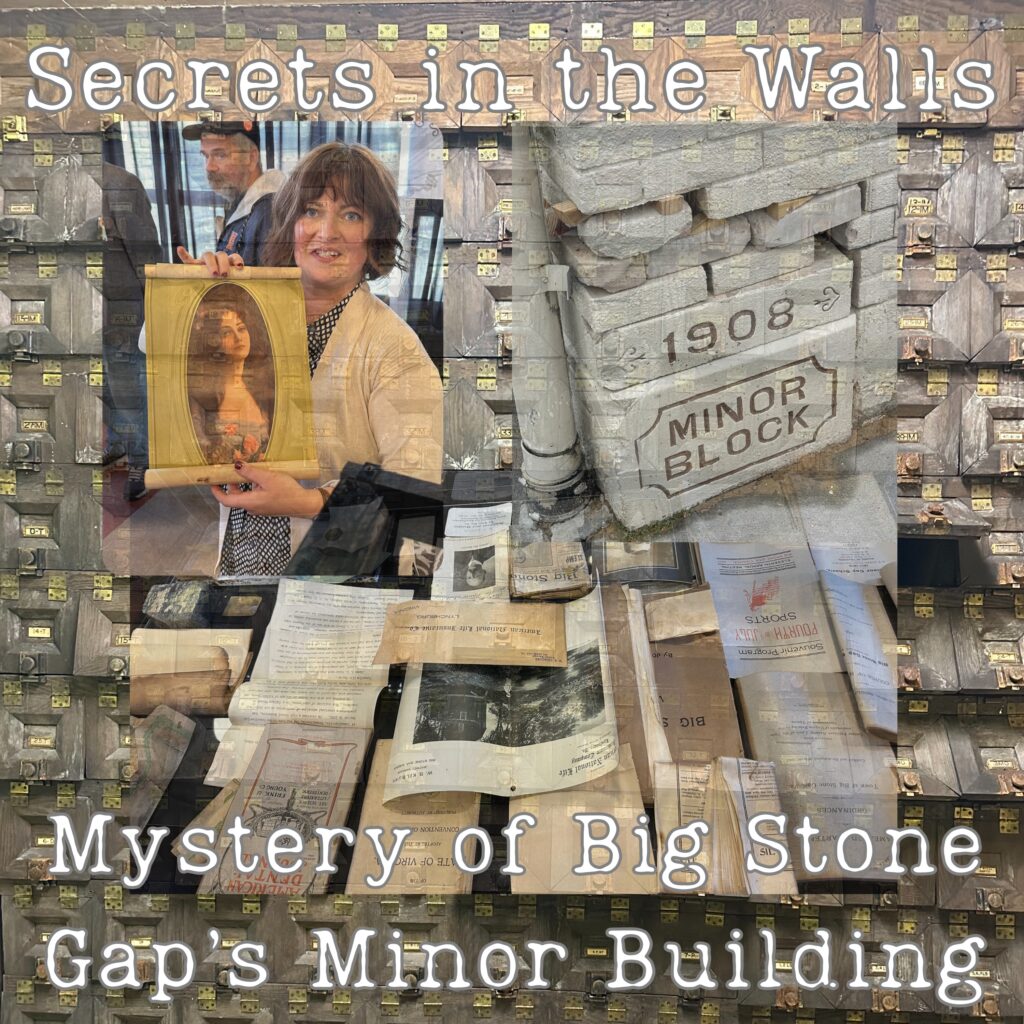
When the Minor Building first rose in 1908, it symbolized Big Stone Gap’s optimism during a time of rapid industrial growth. Designed with classical architectural elements and built to serve a bustling Appalachian town, the structure quickly became more than just an office space—it became a community hub. Over the years, it housed a well-known dentist office, and it provided meeting space for the local Masonic lodge, whose members carried out generations of tradition within its walls. Eventually, the building transitioned into the corporate headquarters of the Westmoreland Mining Company, a dominant force in the region’s coal economy. During that early era of excitement and expansion, workers placed a time capsule inside the building—sealed in 1908 and hidden for more than a century.
More than 117 years later, when a local couple purchased the aging structure, they never expected the building to reveal such a layered past. What began as a restoration project soon became a full-scale historical uncovering. As they walked through old rooms, examined the original architecture, and uncovered remnants left by dentists, lodge members, and mining executives alike, the couple realized they were stepping into a preserved story of community life, labor, and local memory.
Their discoveries deepened when they found a forgotten collection of photographs and documents from the 1970s through the early 1990s—visual records of daily operations at Westmoreland Mining. These photos revealed the people who worked there, the offices they occupied, and the routines that shaped decades of Appalachian industry. The images helped map the building’s evolution, capturing not only corporate life but the small, human details that connected the Minor Building to generations of residents.
Then came the building’s greatest revelation: a 1908 time capsule hidden within its walls since the day construction finished. Inside were newspapers, civic documents, symbolic items, and artifacts offering a vivid snapshot of life in early 20th-century Big Stone Gap. The capsule connected the building’s earliest purpose—before the dentist’s drill hummed or the Masonic lodge met—to the aspirations of the town’s founders. Opening it was like hearing a voice from the past, reminding the community of who they were and who they hoped to become.
This episode takes listeners inside that remarkable journey. From the building’s multifunctional past—medical care, fraternal gatherings, industrial management—to its rediscovery and rebirth, we explore how its new owners have become caretakers of Big Stone Gap’s heritage. As they work to transform the Minor Building into an antique mall, they aim to honor every layer of its history, displaying artifacts, preserving stories, and creating a place where visitors can feel the past in the present. This is the story of a building that never stopped remembering—and of a community rediscovering itself through what it left behind.